Cosmetic Dentistry in Sangbong-dong How much of my front teeth has to be shaved to change their shape?
If the edge of a tooth is slightly chipped, we can fill just that spot with composite. Porcelain veneers, which bond a thin shell to the front, and crowns, which wrap around the whole tooth, need different amounts of space and involve shaping different parts of the tooth.
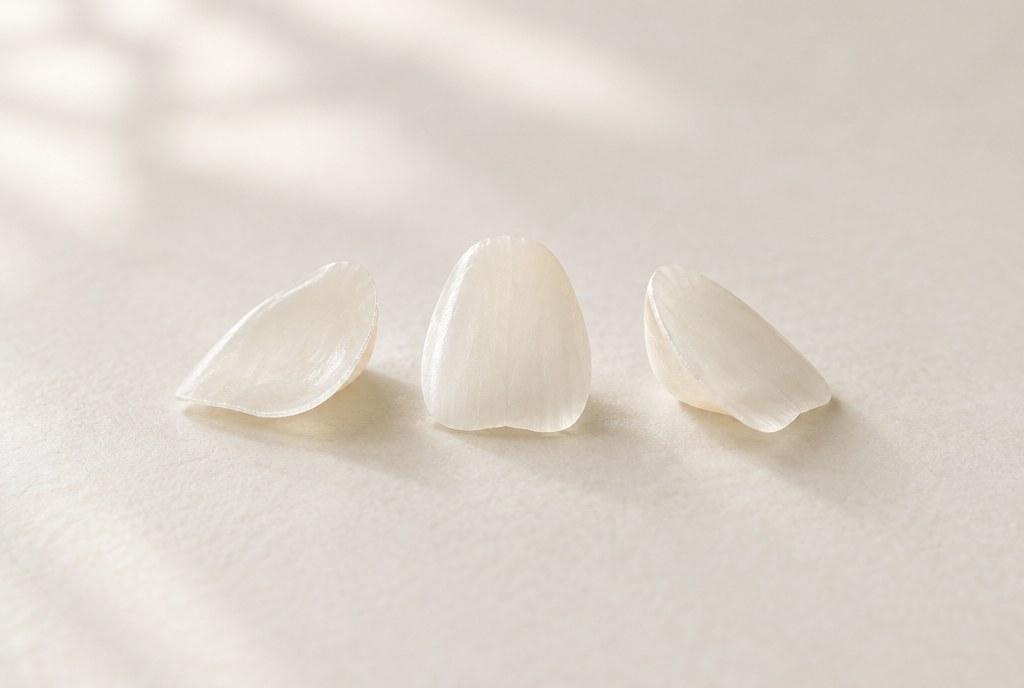
Before Treatment
Is there room to add material without shaving the tooth?
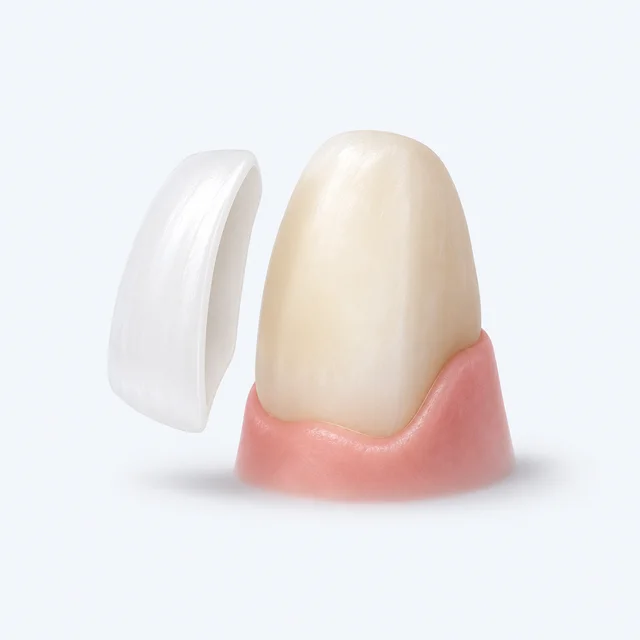
- Where the tooth sits, seen from the side
- A tooth that already sits forward can stick out even more with a thin layer added. If the position of your teeth is the concern, it’s worth checking whether orthodontic treatment can move them before reshaping your front teeth.
- The color you see when you smile, and where you bite
- If the opposing teeth hit the edge of a front tooth hard, a thin restoration can chip. If you only want to change the color, start by comparing stain removal and whitening for your natural teeth.
Your Options
Which is right for me: bonding, veneers, or a front-tooth crown?
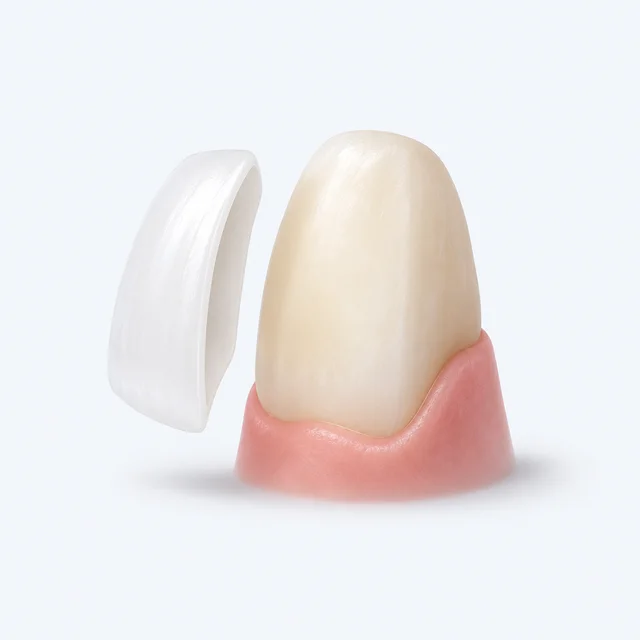
A thin shell is bonded to the front surface of a front tooth.
- A small chipped edge or a narrow gap
- Composite is added and shaped directly on the tooth. Less of the tooth needs shaping, but it can chip when force concentrates on it, and its color or shine can change over time.
- No-prep veneers
- These can work when a tooth sits back or has a gap, so added thickness won’t look out of place. Without enough space, it’s hard to get the outline you want with no shaping at all.
- Porcelain veneers
- A thin restoration covers the front of the tooth. If the color you want to cover is dark, or the front surface sticks out, the tooth may need to be shaped to make room for the material.
- Front-tooth crowns
- If the tooth is badly broken, or an existing restoration is so large that the front surface alone can’t support it, the whole tooth is covered. More of the tooth is shaped away, and removed tooth structure doesn’t grow back. Sensitivity may linger, and a root canal may even be needed.
Treatment Steps & Aftercare
When are the color and shape matched to the neighboring teeth?
Before treatment
Your dentist compares brightness, translucency, and the gumline with the neighboring teeth. Whitening can change the color of your natural teeth, so if you want it too, we’ll decide which treatment comes first.
Before and after placement
We check the shape and thickness, and see whether anything catches when you smile or speak. After it’s bonded, you close your mouth and move your jaw so we can adjust any spot where your front teeth hit.
Caring for it day to day
Biting ice or hard packaging with your front teeth can chip the corners. Clean along the edge of the restoration and between your teeth, and tell us at checkups if you grind your teeth.
FAQs
Can the color match if only one front tooth is treated?
When only one tooth is treated, the color and translucency of the teeth around it really stand out. How closely we can match depends on the color of the tooth underneath and the thickness of the material.
My gums bleed. Can you take impressions right away?
If your gums are swollen or bleeding, it’s hard to pin down the margin where the restoration will meet them. It may be better to treat the gums first and make the restoration once their shape has settled.
Does a tooth with a composite filling always need a crown?
We start by looking at how much of the tooth the composite covers and whether the rest of the tooth has cracked. If the defect is small, a partial repair may be enough.
Book a Visit
How do I describe what I want to change at the consultation?
Point out the one thing that bothers you most: the color of your front teeth, the shape of the edges, or the gaps between them. If you’ve ever injured or filled a front tooth, let us know that too.