Orthodontics in Sangbong-dong My front teeth overlap. Can I straighten just the front teeth?
If there is room for your front teeth to move and your back teeth bite together well, limited orthodontics may be an option. If moving them would make them hit the lower teeth, or the back teeth need to move too, the scope of treatment changes.
Before Treatment
What is different about evaluating children and adults for braces?
- For children: the jaw and where permanent teeth will come in
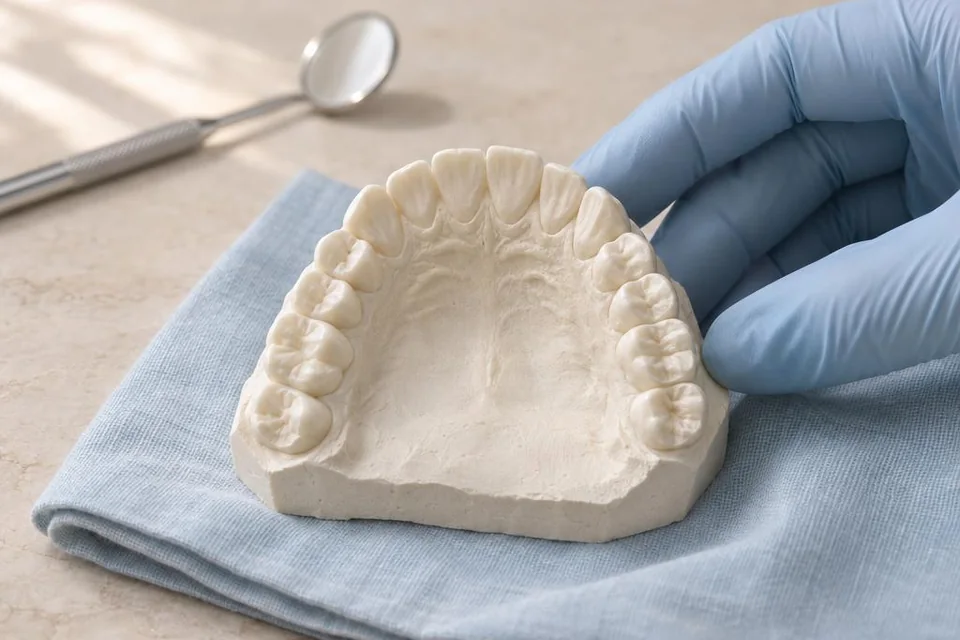
- Your dentist looks at where the permanent teeth will come in under the baby teeth and which way the jaw is growing. With a crossbite or a jaw that shifts to one side, starting early may be worth considering. If more permanent teeth need to come in before a decision can be made, regular checkups keep an eye on things.
- For adults: the gums and existing dental work
- The exam looks at how well the bone supports your teeth and whether an implant sits in the path of tooth movement. Any gum inflammation is treated first. If your upper and lower jaws differ a lot in size, moving the teeth alone can only change so much.
Your Options
Should I choose fixed braces or clear aligners?
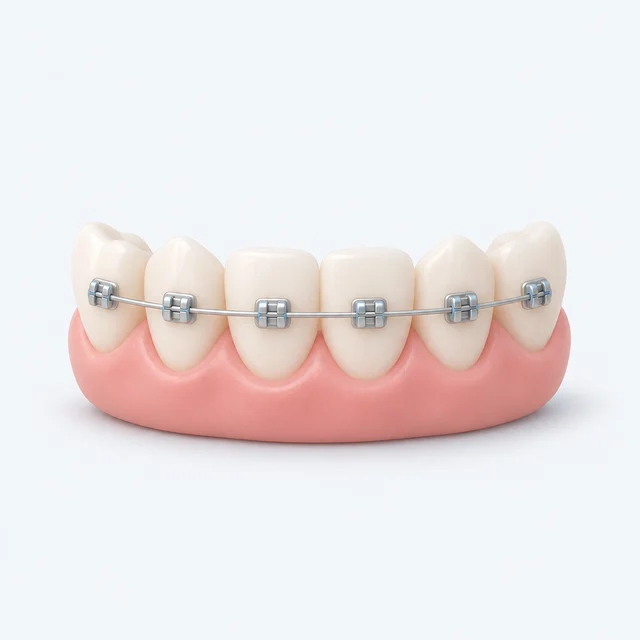
A thin wire runs through the brackets bonded to the teeth.
- Fixed braces
- Brackets are bonded to your teeth, and a wire moves them. There is nothing to take in and out, but you need to clean carefully between the braces and the gums.
- Clear aligners
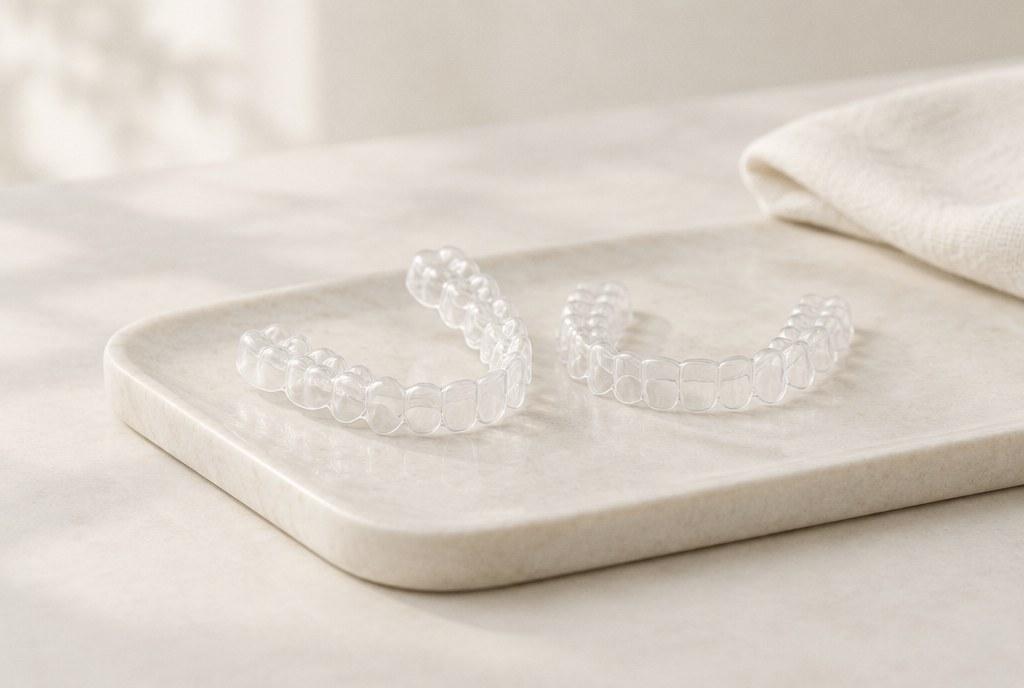
- You can take them out to eat and brush. The first questions are whether your teeth can move as far as they need to, and whether you can wear the aligners for the required hours each day. You may also need small attachments or rubber bands.
- When there isn't enough space
- Depending on how crowded or protruding the teeth are, your dentist may trim a little enamel between the teeth or consider an extraction. The type of appliance alone doesn't decide whether to extract. Compare where your front teeth would end up with and without an extraction.
Treatment Steps & Aftercare
What happens at checkups once the braces are on?
Deciding the scope of treatment
Your dentist reviews your bite and images to decide which teeth to move and how long treatment is expected to take. Cavities or gum inflammation may be treated before you start wearing an appliance.
Checking tooth movement
At each visit we check where your teeth are and how they bite together. Teeth move at different speeds, and if the roots shorten or a gum problem develops, we may adjust the force and the schedule.
Wearing a retainer
Teeth can still move after the braces come off. Check that your retainer still fits the way it did at first, and stick to the wear and checkup schedule you are given.
FAQs
Do I still need cavity checkups during orthodontic treatment?
Plaque easily builds up around the brackets and close to the gums. Learn how to clean the spots your toothbrush can't reach using a small brush or interdental brush, and come in for regular checks.
I injured a tooth in the past. Can I still get braces?
Tell us which tooth and when it happened. The root and the inside of the tooth are checked to decide how far it can be moved and how often you need checkups.
I have an event coming up. Can the braces be off by then?
The finish date depends on how far the teeth have to move, the bite, and how your teeth actually respond. Mention important dates at your first consultation.
Book a Visit
What should I bring up at an orthodontic consultation?
Tell us whether it is the front teeth that show when you smile, or the way your teeth bite together when you eat. If you have a retainer from before, bring it.