Wisdom Tooth Removal in Sangbong-dong My wisdom tooth swells up now and then. Should I have it pulled?
It comes down to how often the gum has swollen and whether the molar right in front has been damaged. If the tooth is easy to clean and there are no problems around it, you can keep an eye on it with regular checkups.
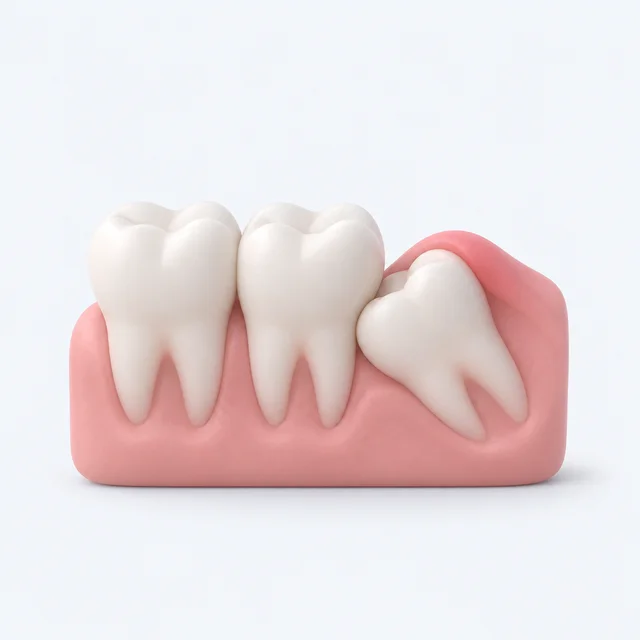
The last tooth on the right of the model is tilted forward.
Before Treatment
What can an X-ray of the wisdom tooth tell us?
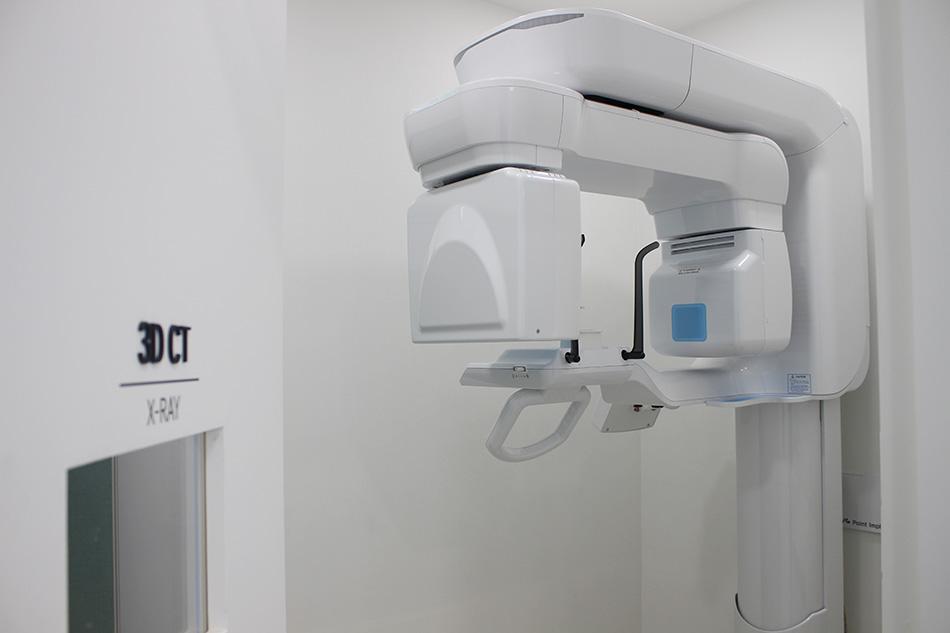
- How deeply it’s impacted
- We look at the direction of the tooth, the shape of its roots, and where it touches the molar in front. Even if you can’t see it well in your mouth, we consider extraction if there’s decay or bone damage between the two.
- How close it is to the lower jaw nerve
- If the roots and the nerve overlap on a flat X-ray, a CT scan may be used to confirm their positions. The closer they are, the more important it is to talk through the risk of changed feeling in your lip or chin after extraction, and whether you should be referred elsewhere.
Your Options
How do you decide between pulling the tooth and leaving it?
- It’s easy to clean and the teeth around it are healthy
- If there’s no pain, decay, infection, or lesion visible on X-rays, we can keep it and check for changes at your checkups.
- The swelling keeps coming back or it’s damaging the next tooth
- If the inflammation keeps recurring or the molar in front is getting damaged, we weigh the benefits of taking it out. Depending on how deeply it’s impacted, the gum may need to be opened or the tooth removed in sections.
- It’s badly swollen right now and you can’t open your mouth well
- The first step is an exam to see whether the infection has spread. Then your dentist decides whether to extract right away or treat the infection first. If you have trouble breathing or swallowing, go to an emergency room or call 119.
Treatment Steps & Aftercare
How do I prepare for an extraction and care for it at home?
Before your appointment
Tell us about any medications and allergies, and whether you’ve ever bled for a long time after a tooth was pulled. Don’t stop your medication on your own. Instructions about eating and having someone come with you depend on the type of anesthesia.
The day of extraction
Bite down firmly on the gauze as instructed. Rinsing the wound hard or spitting often can dislodge the blood clot that protects it. Once the numbness wears off, start with soft foods.
A few days later
Watch whether the pain and swelling ease little by little. You’ll be shown how to clean around the wound based on how extensive the extraction was. Avoid smoking. If stitches were placed, confirm the date for your checkup or stitch removal.
FAQs
Can several be removed at once?
Whether to split them up depends on how deeply the teeth are impacted, how extensive the surgery is expected to be, and how hard it would be to chew on both sides. Let us know how much recovery time your schedule allows.
Can I go to work the day after an extraction?
Recovery is different for a simple extraction and for surgery on a deeply impacted wisdom tooth. Check when you can return to work based on whether your job is physically demanding and what kind of anesthesia you had.
I can’t tell whether the numbness in my lip is from the anesthesia.
If feeling hasn’t returned after the time you were told it would wear off, or the numb area gets larger, let the dental office that did the extraction know.
Medical references
- NHS: Wisdom tooth removal
- Cambridge University Hospitals: Patient information on surgical removal of impacted wisdom teeth
- American Association of Oral and Maxillofacial Surgeons (AAOMS): Care after tooth extraction
- HSE: Recovering after wisdom tooth removal
- NHS: Dental infection (abscess) and emergency symptoms
Book a Visit
When I book, should I tell you which side is swollen?
Tell us whether it’s the upper or lower jaw, and whether you have swelling and a fever. If you can’t open your mouth well or have trouble eating, mention that too.