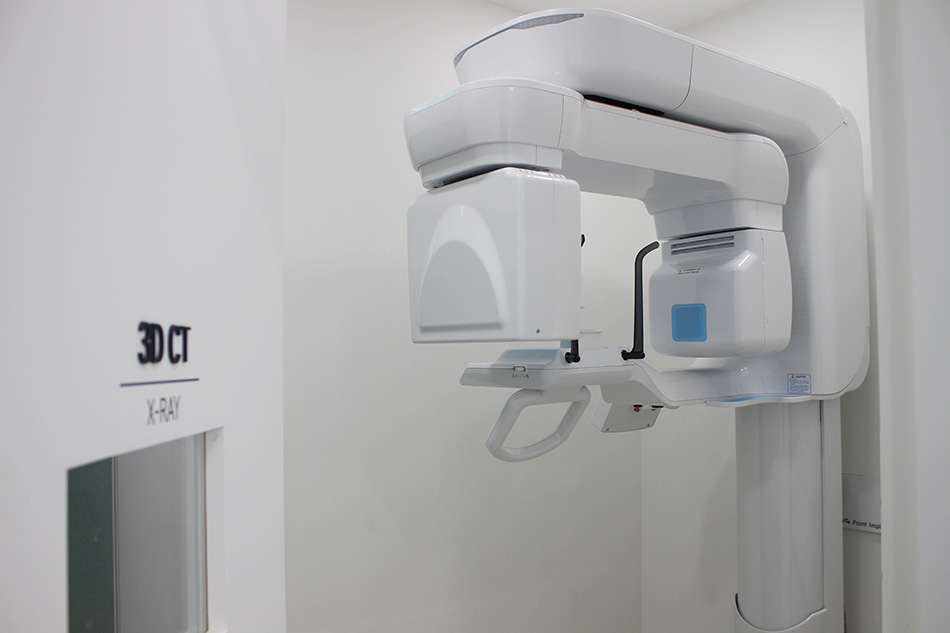
Step 1: Exam and planning to see whether the site can hold an implant
Imaging lets us check the height and width of the jawbone where the tooth is missing, the thickness of your gums, and the condition of the neighboring teeth and the teeth that bite against it.
Next comes a conversation about whether you need bone added, whether the implant can go in right away, or whether another option, such as a bridge or dentures, would suit you better.
We also review your medicines and general health at this stage.
If something could affect healing, such as diabetes or osteoporosis medicine, we may adjust the schedule.
Step 2: Placement day, when the post goes in
After local anesthesia, we place the implant post into the jawbone.
For a few days afterward you may have some swelling or soreness, and how much varies from person to person.
When you come back to have your stitches out, we check that the area is healing well.
If the tooth has been missing a long time and the bone has shrunk, a bone graft may be done alongside the implant or beforehand, which makes the overall timeline longer.
Step 3: The waiting period while bone and post fuse
The post has to fuse firmly with the bone before it can handle chewing forces.
In general, the lower jaw has denser bone than the upper jaw and often takes a little less time, and a bone graft means a longer wait.
The exact timing depends on how you’re healing, which we check with imaging and an exam.
You can carry on with most of your daily routine during this period.
For a tooth that shows when you smile, such as a front tooth, we’ll talk about whether a temporary tooth is an option.
Step 4: Crown day, when your new tooth goes on
Once the post has fused well, we take impressions, make your final tooth (the crown), and attach it.
We check your bite, the spacing with neighboring teeth, and the shape of your gums, and we make small adjustments if needed.
It may feel a little strange for the first few days, so tell us exactly what feels off.
Step 5: Regular checkups to make it last
An implant itself can’t get cavities, but the gum and bone around it can become inflamed.
Clean around the post with interdental brushes or floss, and keep up your checkups at the intervals we recommend.
If the implant feels loose when you bite, or your gums swell or bleed, contact us rather than waiting for your next checkup.
What to ask during your consultation
· How long will the whole process take for me, and how many visits?
· Do I need a bone graft? If so, why?
· Can I have a temporary tooth while I wait?
· What does the fee include, and what costs extra?
· If I’m 65 or older, do I qualify for NHI-covered implants?
Implant treatment follows this order: placement day, a waiting period while the post fuses, the day the tooth goes on, then regular checkups. At your consultation, ask about your own timeline, how many visits you’ll need, and whether you can have a temporary tooth.
Frequently asked questions
- Q. How long does an implant take from start to finish?
- A. If your bone is healthy and you don’t need a bone graft, it often wraps up within a few months. A bone graft makes it longer. We’ll give you an expected timeline once we see your exam results.
- Q. Can I chew right after the post is placed?
- A. Before the post fuses with the bone, it’s best not to bite hard on that spot. Eat soft foods on the other side and follow the care instructions we give you.
- Q. What if the gap shows while I wait?
- A. For a spot that shows, like a front tooth, we’ll talk about whether a temporary tooth works. Whether it’s possible, and how, depends on your condition.
- Q. Can implants get cavities?
- A. The implant itself can’t get cavities, but the gums and bone around it can become inflamed. Brushing, cleaning with interdental brushes, and regular checkups are important.