How do the procedures differ?
With a composite filling, the material is layered into the space left after the decay is removed, then hardened and shaped, so it's usually done in one visit.
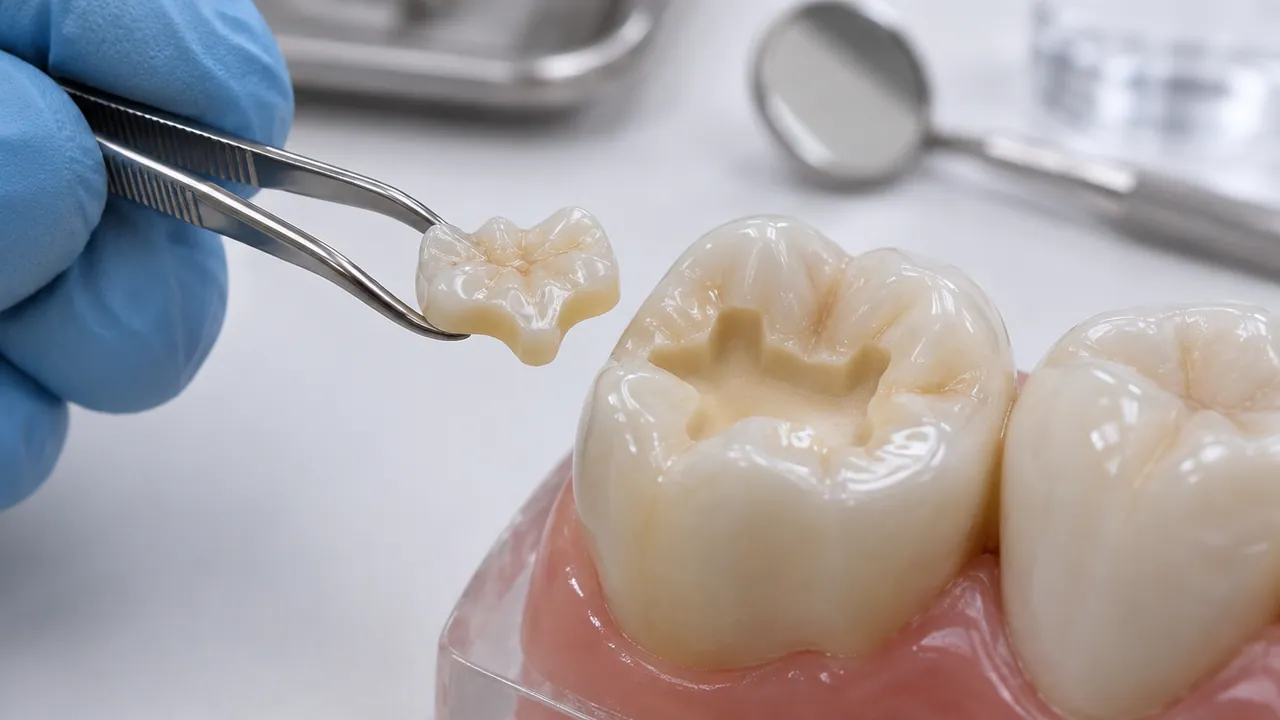
With an inlay, the decay is removed and an impression is taken at the first visit, the tooth is sealed with a temporary material, and the finished piece is bonded in at the next visit.
An inlay requires shaping the tooth a little more so the piece fits.
When is a composite filling the right choice?
It works well for small cavities, visible areas such as front teeth, and notches worn into the tooth near the gum line.
Less tooth is removed, and treatment can be finished right away.
On a large cavity in a back tooth, though, it can wear down under chewing force or pull away at the edges.
Over time, composite can stain slightly or wear down, and it can be touched up or replaced if needed.
When is an inlay the right choice?
An inlay is recommended when decay covers a large area of a back tooth or extends between teeth.
Because it's made outside the mouth, the shape and bite are easier to fit precisely, and it stands up well to chewing force.
Gold is hard and fits the tooth well but is noticeable, while ceramic is tooth-colored but can chip under a hard impact.
Either way, decay can form again at the edge of the filling, so keep flossing and come in for regular checkups.
When to come in right away
- The area around the filling has turned black or food keeps getting caught
- Sharp twinges or sensitivity when you chew that don't go away
At Jungnang First Dental
At Jungnang First Dental, your dentist checks how far the decay goes, explains whether a composite filling or an inlay suits you, how the materials differ, and how many visits to expect, and then goes ahead with treatment.
Fees for non-covered (out-of-pocket) materials are listed in our non-covered treatment fees.
We’re open Monday and Friday 9:30 am–8 pm, Tuesday through Thursday 9:30 am–6:30 pm, and Saturday 9:30 am–2 pm.
Call +82-2-2209-2879 to book or ask a question.