How does tartar form?
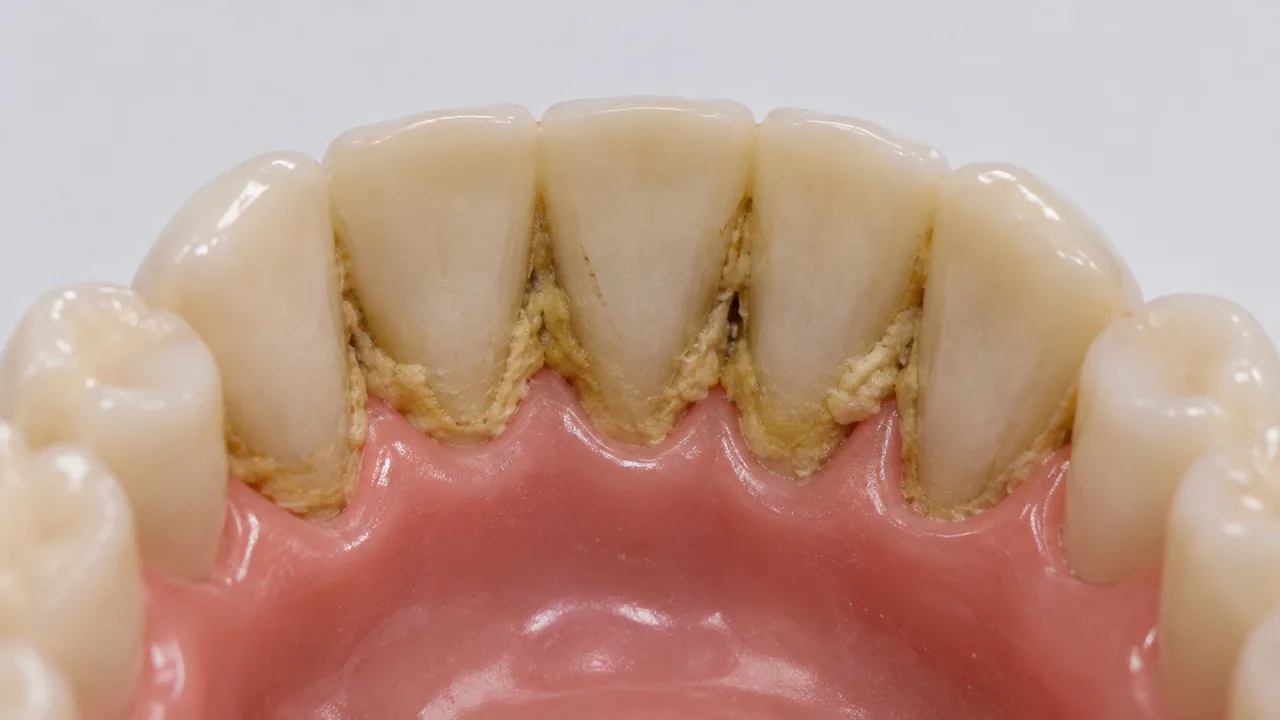
Tartar forms when plaque picks up minerals from saliva and hardens.
Plaque starts to harden after just a few days of poor cleaning, and tartar builds up most where saliva flows into the mouth, such as behind the lower front teeth and on the outside of the upper molars.
Tartar's rough surface catches even more plaque, which leads to gum inflammation and bad breath.
Can't I just scrape it off at home?
Scraping with a tartar tool sold online can cut your gums or scratch the tooth surface.
Scraping on your own only chips off some of what you can see, while the tartar under the gum stays put and keeps the inflammation going.
Rubbing with baking soda or vinegar doesn't dissolve hardened tartar, and the acid in vinegar can damage the tooth surface.
How can I keep tartar from building up?
Brushing at least twice a day with the bristles angled toward the gum line removes plaque before it hardens.
A toothbrush doesn't reach between teeth well, so use floss or interdental brushes too.
Toothpaste with tartar-control ingredients can slow how fast new tartar forms, but it can't remove tartar that has already hardened.
How often should I have a professional cleaning?
The interval depends on how fast tartar builds up and the condition of your gums, and Korean National Health Insurance covers one cleaning a year (January 1–December 31) for age 19 and older.
If tartar builds up quickly, or you've been treated for gum disease, a checkup every 3–6 months may be recommended.
When to come in right away
- Your gums bleed every time you brush
- Your gums are swollen or your teeth feel loose
At Jungnang First Dental
At Jungnang First Dental, your dentist looks at the condition of your gums before a cleaning, explains whether a preventive cleaning is enough or gum treatment is needed, before going ahead.
We’re open Monday and Friday 9:30 am–8 pm, Tuesday through Thursday 9:30 am–6:30 pm, and Saturday 9:30 am–2 pm.
Call +82-2-2209-2879 to book or ask a question.