Why are sealants placed on back teeth?
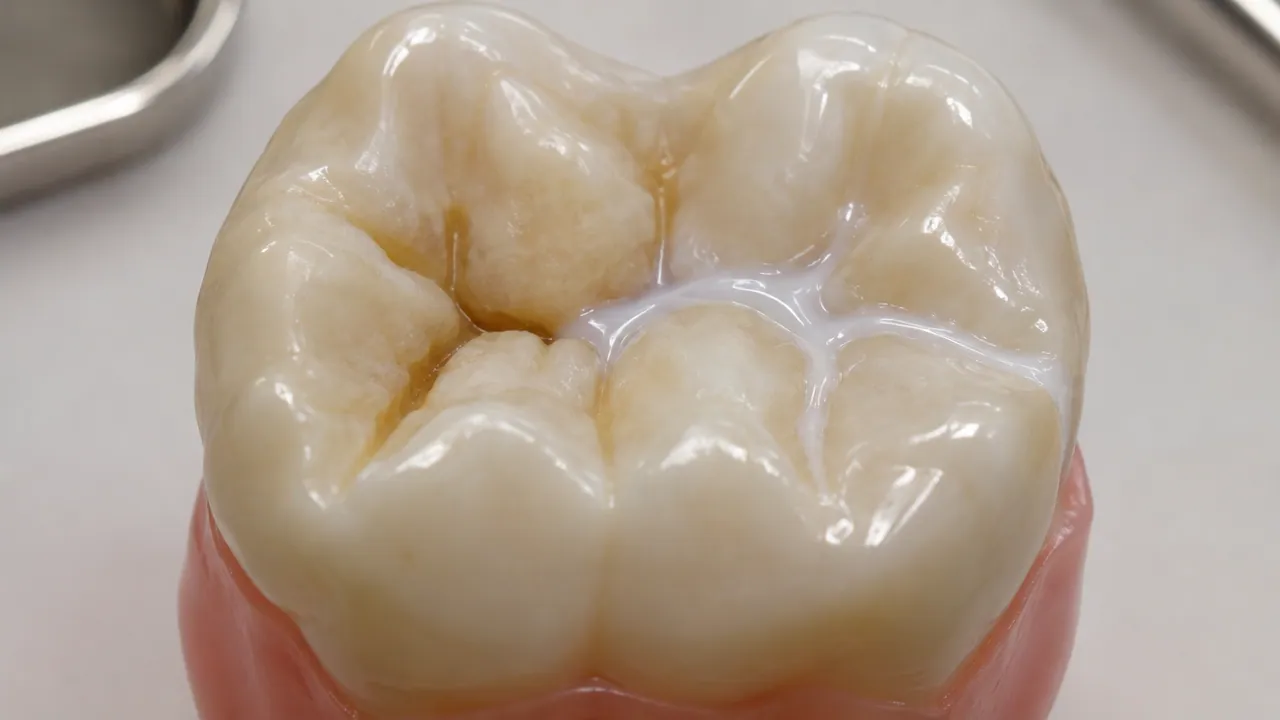
The chewing surface of a molar has grooves narrower and deeper than a toothbrush bristle, so cavities can form in them even when you brush well.
A newly erupted permanent tooth hasn't fully hardened yet, which makes it more vulnerable to cavities.
Depending on the case, sealants are also used on premolars with deep grooves and on baby molars.
Preventing a cavity does less damage to the tooth than filling one later.
How is it done, and does it hurt?
We clean and dry the tooth, brush flowing sealant material into the grooves, and harden it with a light.
In most cases we don't drill the tooth or use anesthesia, so children tend to find it fairly comfortable.
If a cavity has already started in a groove, we clean out the cavity first and then seal it.
It takes only a few minutes per tooth, and your child can usually eat right afterward.
Does a sealant last once it's done?
Sealants can wear down a little with chewing or chip in places, so we check at each regular visit that it's still in place.
If part of it comes off, it can be replaced.
A sealant only covers the grooves on the chewing surface, so you still need floss and fluoride to prevent cavities between teeth.
Even with sealants, frequent sweet snacks and drinks keep the cavity risk up.
When to come in right away
- Grooves on a back tooth have turned black or brown
- Your child says a back tooth hurts when chewing
At Jungnang First Dental
At Jungnang First Dental, we check the grooves and any cavities on newly erupted molars at your child's checkup, and explain which teeth need sealants and when before we go ahead.
Whether Korean National Health Insurance covers sealants on permanent molars depends on age, and we'll confirm that with you at your visit.
We’re open Monday and Friday 9:30 am–8 pm, Tuesday through Thursday 9:30 am–6:30 pm, and Saturday 9:30 am–2 pm.
Call +82-2-2209-2879 to book or ask a question.