What does fluoride treatment do?
Fluoride strengthens the tooth surface so it holds up better against the acid that cavity-causing bacteria produce.
In the earliest stage, when a cavity has just started and the tooth looks chalky white, it can also help the surface harden again.
Fluoride won't fill in a cavity that already has a hole, so those teeth are treated separately.
At what age can fluoride treatment start?
It can start once baby teeth come in, and we talk about it at the first dental checkup.
For young children, we use a smaller amount suited to their age.
Around ages 6 and 12, when permanent molars come in and are prone to cavities, we sometimes shorten the interval.
How is it applied?
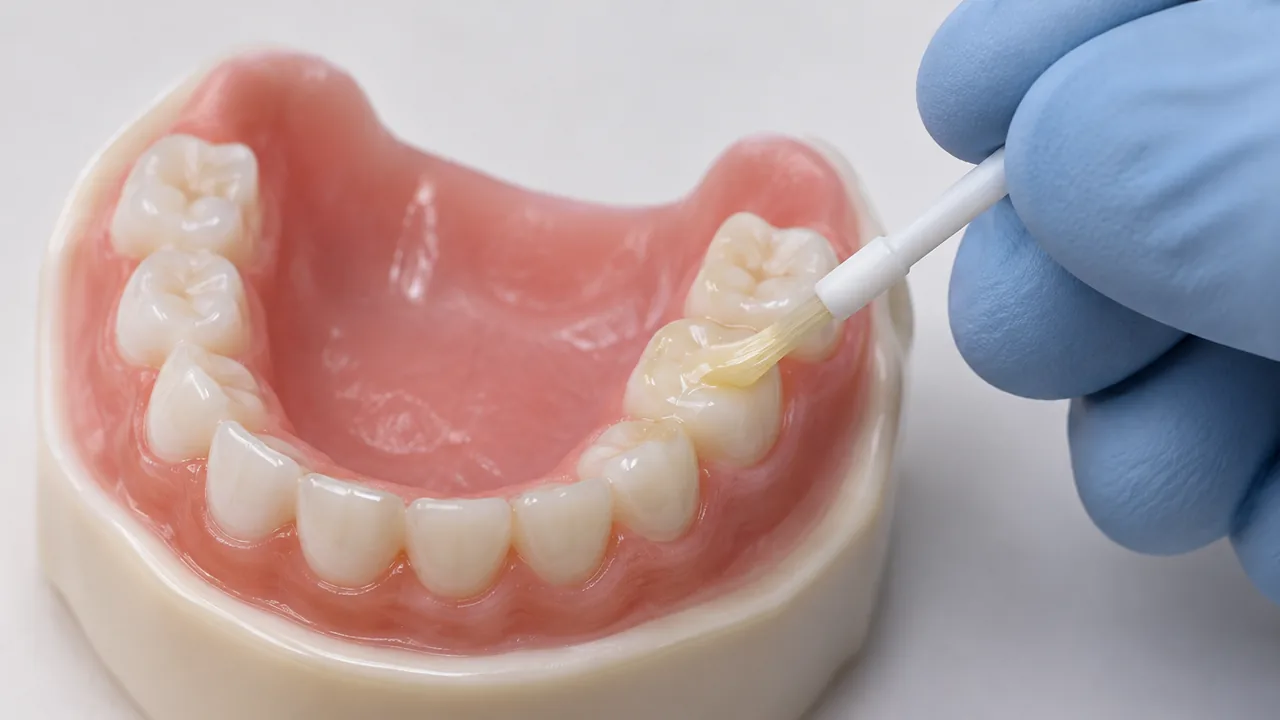
After cleaning and drying the teeth, we usually brush on a thin layer of varnish (a sticky fluoride coating), which takes only a few minutes.
Afterward, don't eat or drink for as long as we tell you, and avoid hard or sticky food for the rest of the day.
The teeth may look slightly yellow for a short while, but the coating comes off the next time your child brushes.
What else should we do at home?
Fluoride toothpaste, in the right amount for your child's age, works together with in-office fluoride to help prevent cavities.
If the grooves on the back teeth are deep, we also consider sealants.
Falling asleep with a bottle or a sweet drink greatly raises the risk of cavities.
At Jungnang First Dental
At Jungnang First Dental, we check your child's cavity risk and brushing, advise you on the fluoride interval and whether sealants are needed, and show you how to brush your child's teeth at home.
We’re open Monday and Friday 9:30 am–8 pm, Tuesday through Thursday 9:30 am–6:30 pm, and Saturday 9:30 am–2 pm.
Call +82-2-2209-2879 to book or ask a question.