Why do teeth become crowded?
When teeth are large for the jaw, or the jaw hasn't grown enough, there isn't room for the teeth to line up.
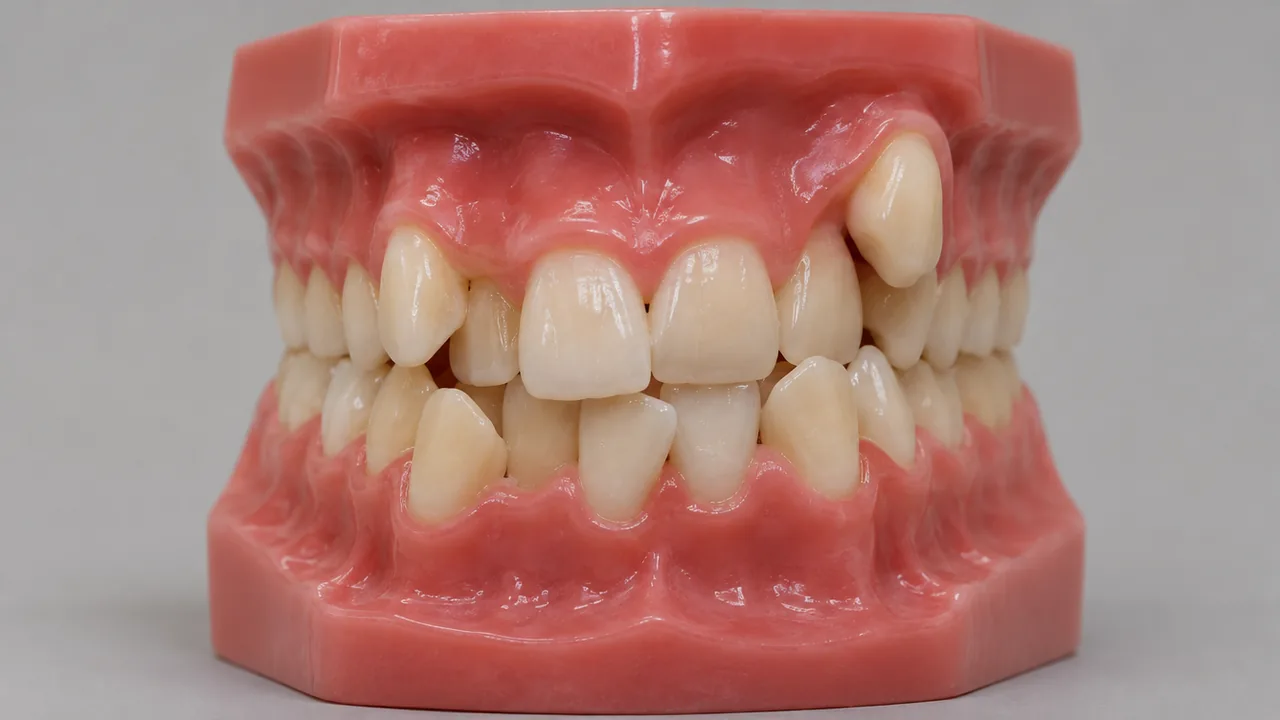
Canines come in later than the front teeth and premolars, so they're easily pushed outward when the space is already taken.
Crowding can also happen when a baby tooth is lost too early and the teeth behind it drift forward, or when a baby tooth stays in too long.
What problems can crowded teeth cause if left alone?
A toothbrush and floss can't reach well between overlapping teeth, so they're more prone to cavities and gum inflammation.
A tooth that sticks out may scrape the inside of your lip and cause sores.
When a canine is out of position, other teeth can take extra force when you move your jaw from side to side.
How is crowding treated?
Treatment means making room and then moving the teeth into line with braces.
If you need only a little more space, your dentist may slim the sides of the teeth slightly or widen the arch.
If you need a lot more, treatment may start with removing premolars.
If only a few front teeth overlap, partial orthodontics may be an option.
For growing children, an appliance that guides jaw growth is sometimes used first, so we recommend a first visit in the early elementary school years.
When to come in right away
- A tooth that sticks out and often scrapes your lip or cheek
- Gums that bleed often between overlapping teeth
At Jungnang First Dental
At Jungnang First Dental, we check how much space is missing and how your teeth meet using photos, X-rays, and a model of your teeth.
Then we explain whether extraction is needed, which orthodontic options are possible, and how long treatment may take.
We’re open Monday and Friday 9:30 am–8 pm, Tuesday through Thursday 9:30 am–6:30 pm, and Saturday 9:30 am–2 pm.
Call +82-2-2209-2879 to book or ask a question.