When are partial front-tooth braces a good fit?
We consider partial braces when the front teeth are slightly crowded or gapped and the back teeth meet well.
Because only a few front teeth are moved, treatment tends to be shorter.
Partial braces have limits when it comes to pulling in a protruding mouth or changing how the upper and lower teeth meet.
After partial braces, you'll wear a retainer so the front teeth don't shift again.
When are clear aligners a good fit?
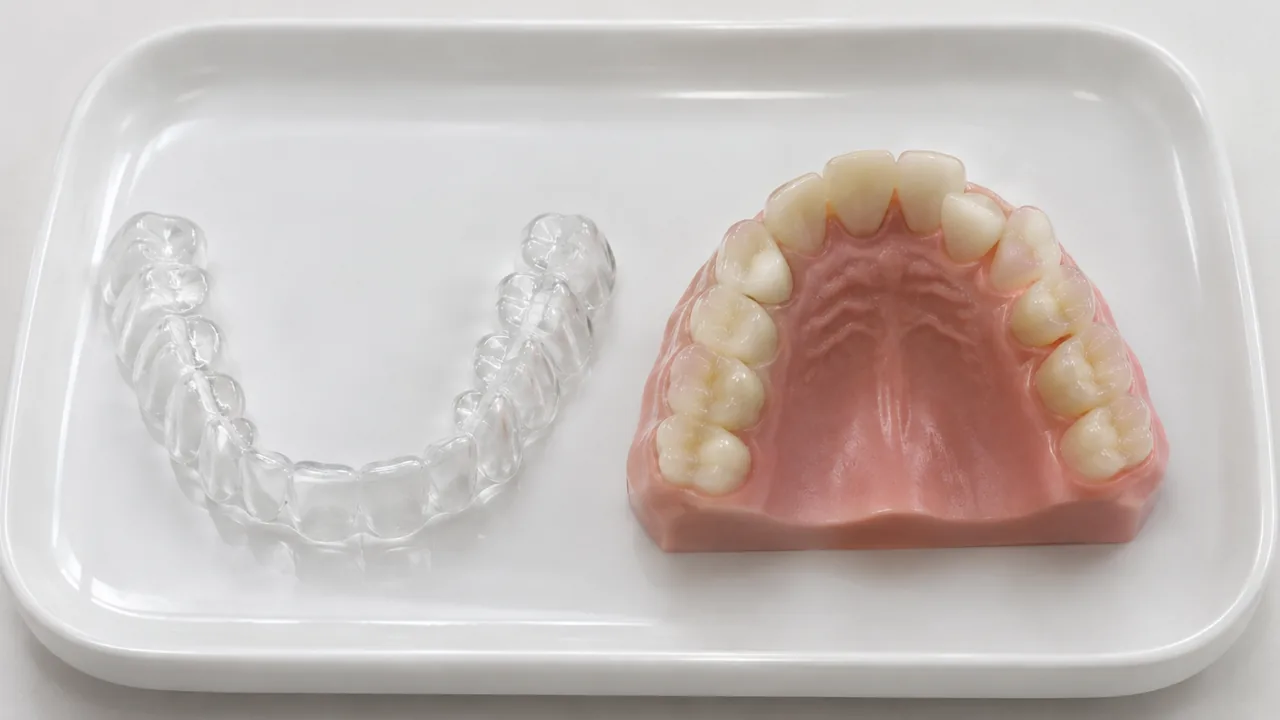
Clear aligners move teeth gradually through a series of clear, removable trays that you switch out step by step.
The trays are less noticeable, and you take them out to eat and brush.
We usually ask you to wear aligners at least 20 hours a day, and if you don't wear them enough, the teeth won't move as planned.
If you're considering aligners, think about whether you can keep them in that long.
If teeth need to rotate a lot or move a long way, braces attached to the teeth may be a better fit.
What do you check before choosing a method?
We use photos, X-rays, and a model of your teeth to check the space available for the teeth and how the upper and lower teeth meet.
If you have cavities or gum inflammation, we treat them before braces.
If what you're hoping for doesn't match what your teeth need, we'll explain what each method can and can't do.
Using fixed braces for part of treatment and clear aligners for the rest is also an option.
At Jungnang First Dental
At Jungnang First Dental, we use an orthodontic exam to check how much space is missing and how your teeth meet, then explain which options (partial braces, clear aligners, or full braces) are possible and how long each would take, and decide together with you.
We’re open Monday and Friday 9:30 am–8 pm, Tuesday through Thursday 9:30 am–6:30 pm, and Saturday 9:30 am–2 pm.
Call +82-2-2209-2879 to book or ask a question.