Why do teeth move again after braces?
Teeth are held in place by the periodontal ligament (the thin membrane between tooth and bone), and gum fibers stretched during braces pull the teeth back toward where they were.
Gum fibers settle more slowly than bone, so right after braces come off is when teeth are most likely to move again.
Habits like tongue thrusting or clenching, and changes with age, also gradually push teeth out of place.
What kinds of retainers are there?
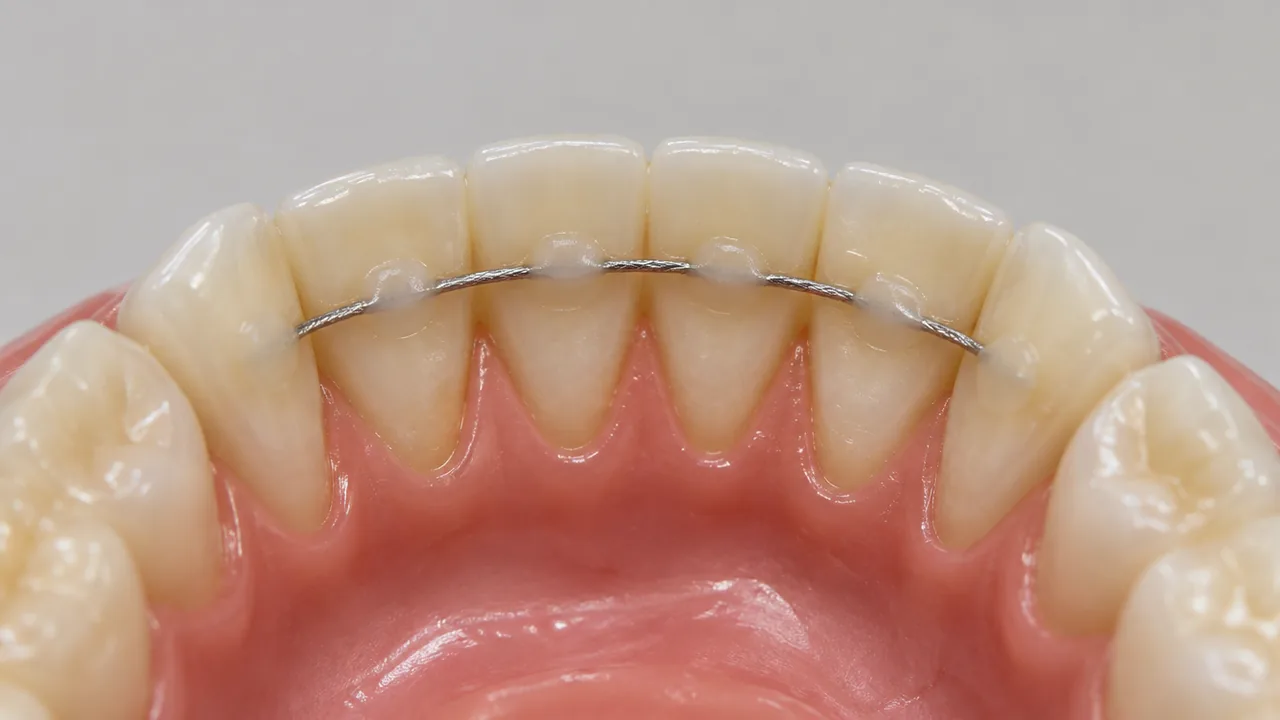
A fixed retainer is a thin wire bonded behind the front teeth, a removable retainer is one you put in and take out, and some people use both.
A fixed retainer is invisible and you can't forget it, but tartar builds up easily around the wire, so you'll need to learn how to floss around it.
A removable retainer is easy to clean, but if you don't wear it as directed, it can't hold your teeth in place.
How long do I need to wear a retainer?
For the first few months after braces, you wear it most of the day, and then often just at night.
Teeth can keep moving a little throughout life, so we recommend wearing a retainer for as long as you can.
Your wearing schedule depends on your teeth before treatment and how far they moved.
What if my retainer doesn't fit?
If a removable retainer feels tight or doesn't seat, your teeth may already have moved, so have it checked right away.
If a fixed wire comes loose, the teeth can move in the meantime and it needs to be bonded again.
If you lose a retainer, making a new one takes time, so contact us right away.
At Jungnang First Dental
At Jungnang First Dental, when your braces come off we explain the retainer type, wearing time, and how to clean it, and at regular checkups afterward we check the position of your teeth and the condition of the retainer.
We’re open Monday and Friday 9:30 am–8 pm, Tuesday through Thursday 9:30 am–6:30 pm, and Saturday 9:30 am–2 pm.
Call +82-2-2209-2879 to book or ask a question.